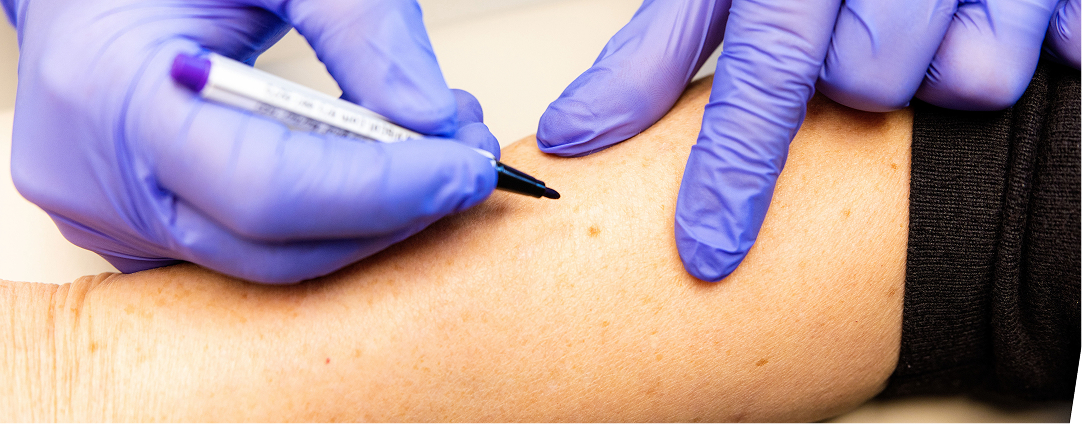
Surgical & Procedural Dermatology

Some skin conditions are best treated with in-office procedures, including biopsies and surgical removal of growths or skin cancers. When surgery is needed, we take a careful, unhurried approach, with attention not only to treating the condition but also to how the skin will heal.

When stitches are required, wounds are closed thoughtfully with an emphasis on comfort, proper healing, and minimizing visible scarring. Each procedure is planned with the surrounding skin in mind, and clear guidance is provided before and after treatment so you feel prepared and supported throughout the healing process.

  • Surgical Excisions
    • We surgically treat conditions including:
      • • Skin cancers, including basal cell and squamous cell carcinomas
      • • Benign growths, such as cysts, lipomas, and certain facial lesions
      • • Hidradenitis suppurativa, including unrooting procedures when appropriate
      • • Nail conditions, including nail biopsies
  • When Surgery is Needed
    • When surgery is needed, careful planning and technique are used to promote healing and minimize visible scarring. When stitches are required, closures are designed to support the natural healing process and reduce tension on the skin. In most cases, only dissolvable sutures are used beneath the surface of the skin to improve comfort and cosmetic outcome.
  • Other In-Office Procedures
    • In addition to surgical excisions, we offer a variety of office-based procedures, including:
      • • Electrodessication and curettage (ED&C) for select skin cancers
      • • Shave removal procedures for diagnosis or treatment
      • • Nail and eyelid biopsies
      • • Intralesional steroid and chemotherapy agent injections
      • • Incision and drainage for appropriate lesions
      • • Microwave-based therapy for select warts
  • Procedure Selection and Preparation
    • Each procedure is selected based on the diagnosis, location, and individual patient considerations.
    • We take time to explain why a procedure is recommended, what to expect during healing, and how to care for the area afterward